The Balanced Scorecard (BSC) is a strategic management framework that helps organizations translate their vision and strategy into measurable objectives across multiple dimensions. Developed by Robert Kaplan and David Norton in 1992, the Balanced Scorecard moves beyond traditional financial metrics by incorporating customer, internal process, and learning & growth perspectives, ensuring a holistic approach to performance evaluation.
The Balanced Scorecard is widely used in corporate strategy, aligning business activities with long-term goals while fostering continuous improvement. It connects to theories such as Stakeholder Theory, Resource-Based View (RBV), and Value Chain Analysis, helping firms optimize operations and competitive positioning.
The Four Perspectives of the Balanced Scorecard
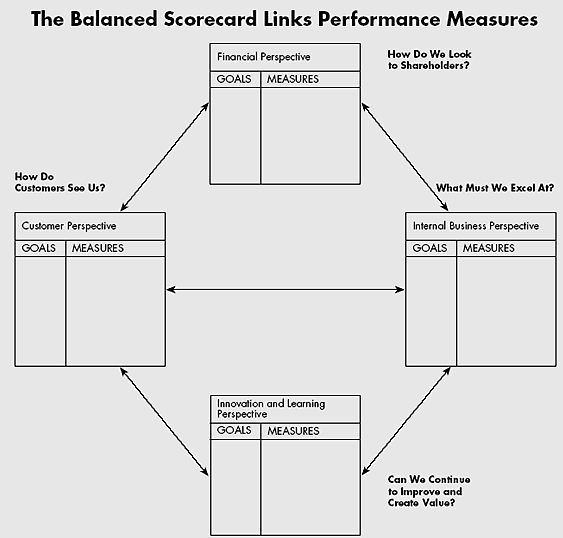
Image per the original article by Kaplan and Norton (1992)
The Balanced Scorecard evaluates performance across four key perspectives:
1. Financial Perspective – Measuring Profitability and Growth
- Focuses on financial outcomes such as revenue growth, cost efficiency, and return on investment (ROI).
- Ensures that strategic initiatives contribute to long-term financial success.
Link to Theories:
- Shareholder Value Theory emphasizes maximizing financial returns for investors.
- Capital Structure Theory (Modigliani-Miller Theorem) explores how financing decisions impact profitability.
2. Customer Perspective – Enhancing Market Position
- Measures customer satisfaction, brand loyalty, and market share.
- Helps businesses align offerings with consumer expectations.
Link to Theories:
- Porter’s Generic Strategies (Cost Leadership, Differentiation, Focus) guide customer-centric strategies.
- Consumer Behavior Theory explains how businesses influence purchasing decisions through branding and service quality.
3. Internal Business Process Perspective – Operational Efficiency
- Evaluates process improvements, innovation, and supply chain effectiveness.
- Ensures businesses optimize workflows to enhance productivity.
Link to Theories:
- Value Chain Analysis (Michael Porter) helps firms streamline operations for competitive advantage.
- Lean Management & Six Sigma focus on reducing inefficiencies and improving quality.
4. Learning & Growth Perspective – Sustaining Long-Term Success
- Measures employee development, organizational culture, and technological advancements.
- Encourages continuous learning and innovation.
Link to Theories:
- Resource-Based View (RBV) highlights the importance of human capital and intellectual assets.
- Knowledge-Based View (KBV) emphasizes leveraging expertise for sustained competitive advantage.
Example: How Businesses Apply the Balanced Scorecard
Consider L’Oréal, a global cosmetics company:
- Financial Perspective: L’Oréal tracks revenue growth and profitability across product lines.
- Customer Perspective: It measures brand perception, customer satisfaction, and market share in different regions.
- Internal Process Perspective: L’Oréal optimizes its supply chain and R&D processes to enhance efficiency.
- Learning & Growth Perspective: The company invests in employee training and digital transformation to sustain innovation.
By integrating the Balanced Scorecard, L’Oréal ensures strategic alignment, operational excellence, and long-term competitiveness.
Conclusion
The Balanced Scorecard is a powerful tool for strategic management, ensuring businesses evaluate performance beyond financial metrics. By linking to Stakeholder Theory, RBV, Value Chain Analysis, and Consumer Behavior Theory, organizations optimize decision-making, enhance customer satisfaction, and drive sustainable growth.