Key takeaway: STP is a core marketing framework that helps firms identify attractive customer groups, select the segments they will serve, and position their offering to create clear value. It ensures marketing efforts are focused, relevant, and aligned with customer needs, improving competitive advantage and communication effectiveness.
The Segmentation, Targeting, and Positioning (STP) framework is a strategic marketing model that helps businesses identify and engage the most valuable customer segments. It ensures that companies tailor their offerings to specific market needs, optimizing competitive advantage and profitability.
STP is widely used in market analysis, brand strategy, and customer engagement, ensuring that businesses allocate resources efficiently. It connects to theories such as Consumer Behavior Theory, Porter’s Generic Strategies, and Brand Equity Theory, shaping how firms refine their market approach.
1. Market Segmentation – Dividing the Market
Segmentation involves dividing a broad market into distinct groups based on shared characteristics. Businesses use segmentation to identify high-yield customer segments that align with their strategic goals.
Types of Market Segmentation:
- Demographic Segmentation – Age, gender, income, education, occupation.
- Geographic Segmentation – Location, climate, urban vs. rural markets.
- Psychographic Segmentation – Lifestyle, values, interests, personality traits.
- Behavioral Segmentation – Purchase behavior, brand loyalty, usage rate.
Link to Theories:
- Consumer Behavior Theory explains how psychological and social factors influence purchasing decisions.
- Network Effects highlight how customer interactions shape market segmentation strategies.
2. Targeting – Selecting the Most Profitable Segments
Once segments are identified, businesses evaluate their attractiveness and select the most viable ones for marketing efforts. Targeting ensures that companies focus on segments with high growth potential and profitability.
Targeting Strategies:
- Mass Marketing – Broad appeal with minimal differentiation.
- Differentiated Marketing – Tailored strategies for multiple segments.
- Concentrated Marketing – Focused approach on a niche market.
- Micromarketing – Hyper-personalized strategies for individual customers.
Link to Theories:
- Porter’s Generic Strategies (Cost Leadership, Differentiation, Focus) guide firms in selecting competitive positioning.
- Game Theory helps businesses anticipate competitor responses to targeting strategies.
3. Positioning – Establishing Market Identity
Positioning defines how a brand differentiates itself in consumers’ minds. It ensures that businesses create a unique, compelling value proposition that resonates with their target audience.
Positioning Strategies:
- Functional Positioning – Emphasizing product benefits and features.
- Emotional Positioning – Creating psychological connections with customers.
- Symbolic Positioning – Associating the brand with prestige or status.
- Experiential Positioning – Focusing on customer experience and engagement.
Link to Theories:
- Brand Equity Theory explains how strong positioning enhances customer loyalty and perceived value.
- Behavioral Economics highlights how emotions drive purchasing decisions.
How to Perform Segmentation, Targeting, and Positioning Analysis
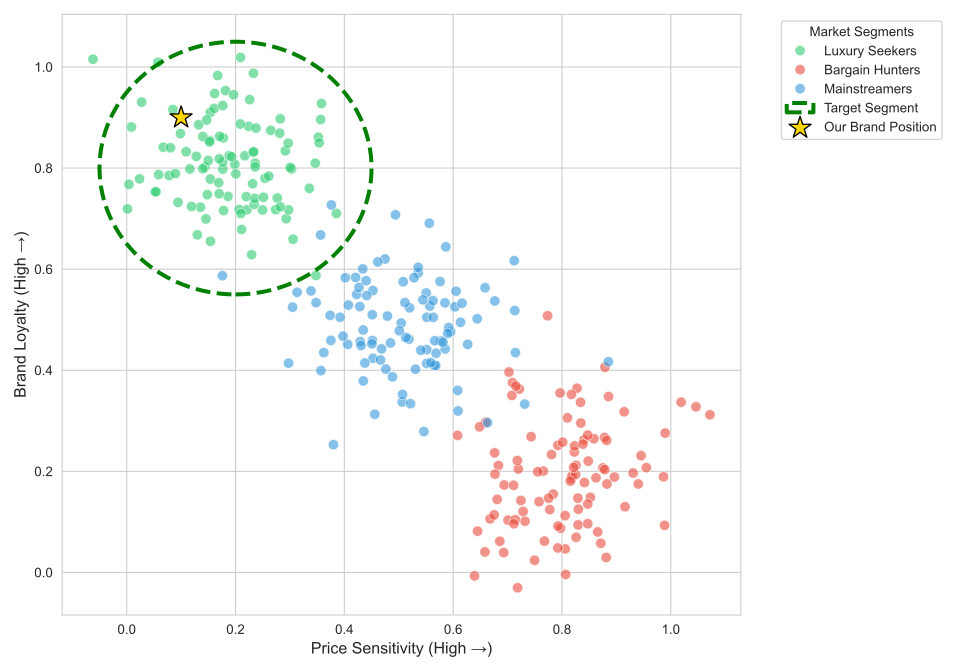
The image above illustrates how an organization may analyse its brand, product, or service segmentation, targeting, and positioning.
Common Misconceptions
Segmentation, Targeting and Positioning is often misunderstood, particularly by those who treat the framework as a linear marketing exercise rather than an integrated process that shapes strategic choices. A common misconception is that segmentation requires highly detailed demographic categories, even though effective segmentation depends on identifying meaningful differences in needs and behaviours. Some also assume that targeting simply involves selecting the largest or most profitable segment, although the decision must reflect organisational capabilities and competitive dynamics. Another misunderstanding is that positioning concerns only promotional messaging, when it in fact involves defining the value proposition and ensuring that all elements of the marketing mix consistently reinforce the intended market position.
Example: How Businesses Apply the STP Framework
Consider Rolls-Royce, a luxury automobile and aerospace manufacturer:
- Segmentation: Rolls-Royce targets high-net-worth individuals and corporate clients in the luxury automotive and aerospace sectors.
- Targeting: The company focuses on niche markets where premium engineering and exclusivity are valued.
- Positioning: Rolls-Royce differentiates itself through heritage, craftsmanship, and technological excellence, reinforcing its prestige status.
By implementing the STP framework, Rolls-Royce enhances brand equity, customer loyalty, and competitive advantage, ensuring long-term market success.
Conclusion
The Segmentation, Targeting, and Positioning (STP) framework is a critical tool for businesses seeking to refine their market approach and optimize customer engagement. By integrating Consumer Behavior Theory, Porter’s Strategies, and Brand Equity Theory, firms enhance strategic decision-making, competitive positioning, and profitability.