Key takeaway: The PDCA cycle is a continuous improvement method with four steps: plan a change, implement it, check results, and standardise successful solutions. It encourages iterative learning, data‑driven decisions, and systematic problem‑solving, helping organisations improve processes, quality, and performance over time.
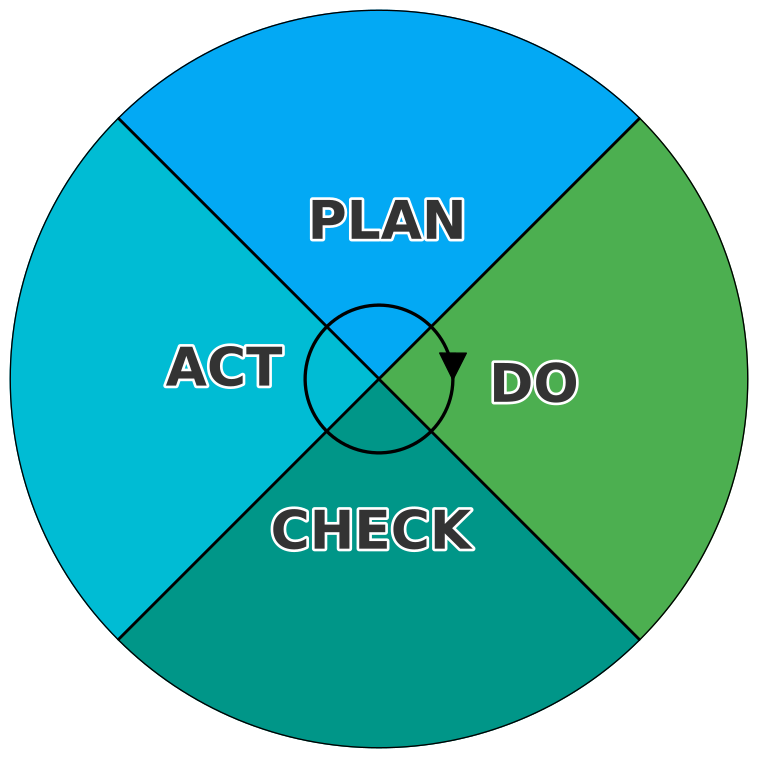
The Plan-Do-Check-Act (PDCA) cycle (also known as the Deming cycle) is a structured, iterative approach to continuous improvement, widely used in business management and quality control. Originally developed by Walter Shewhart and later refined by W. Edwards Deming (read more about W. Edwards Deming), PDCA provides a systematic method for problem-solving and process optimization. It is particularly valuable in lean management, Six Sigma, and total quality management (TQM) frameworks, helping organizations enhance efficiency and effectiveness.

Detailed Explanation of PDCA
1. Plan
The first phase involves identifying a problem or opportunity and developing a strategy to address it. This step includes:
- Defining objectives and expected outcomes.
- Analyzing current processes to identify inefficiencies.
- Developing hypotheses for improvement.
- Setting measurable targets to track progress.
This phase aligns with strategic planning and root cause analysis, ensuring that decisions are data-driven rather than reactive.
2. Do
Once a plan is established, the next step is implementation. Key aspects include:
- Executing the plan on a small scale to test feasibility.
- Collecting data on performance and outcomes.
- Training employees to ensure proper execution.
This phase is closely linked to pilot testing and experimentation, ensuring that changes are validated before full-scale deployment.
3. Check
After implementation, businesses must evaluate results to determine effectiveness. This involves:
- Comparing actual outcomes with expected results.
- Identifying deviations and areas for improvement.
- Using statistical analysis to assess performance.
This phase connects to performance measurement and feedback loops, ensuring that decisions are based on empirical evidence.
4. Act
Based on findings from the Check phase, businesses take corrective actions:
- Standardizing successful changes across the organization.
- Adjusting strategies to refine improvements.
- Repeating the cycle for continuous enhancement.
This phase is integral to Kaizen (continuous improvement) and organizational learning, reinforcing a culture of adaptability.
Theoretical Connections
PDCA is deeply embedded in various management theories:
- Deming’s System of Profound Knowledge – Emphasizes the importance of iterative learning.
- Lean Thinking – PDCA supports waste reduction and efficiency.
- Six Sigma DMAIC (Define, Measure, Analyze, Improve, Control) – Shares similarities with PDCA’s structured approach.
Example: PDCA in Action
Consider a retail company aiming to improve customer satisfaction:
- Plan: The company identifies long checkout times as a problem and sets a goal to reduce wait times by 30%.
- Do: It implements self-checkout kiosks in select stores.
- Check: Customer feedback and transaction data reveal a 25% reduction in wait times.
- Act: The company refines kiosk placement and expands the initiative across all locations.
Conclusion
By continuously cycling through PDCA, businesses can drive sustainable improvements and maintain competitive advantage.