Key takeaway: Lewin’s model explains organisational change as a three‑step process: unfreezing current behaviours, implementing new practices, and refreezing them to stabilise. It highlights the need to prepare people for change, support them through transition, and reinforce new behaviours so they become part of everyday organisational routines.
Managing organizational change is a complex process, requiring businesses to address structural, operational, and cultural transformation. Kurt Lewin’s Unfreeze-Change-Refreeze Model, developed in the 1940s, is a three-phase framework that simplifies change management by focusing on psychological and organizational dynamics.
Lewin’s model is often considered the precursor to modern change management theories, laying the groundwork for structured change initiatives. It suggests that successful change requires breaking old habits, introducing new behaviors, and solidifying these behaviors into organizational culture.
This model remains highly relevant for business leaders navigating digital transformation, mergers, restructuring, or process optimization, as it helps minimize resistance while ensuring long-term implementation.
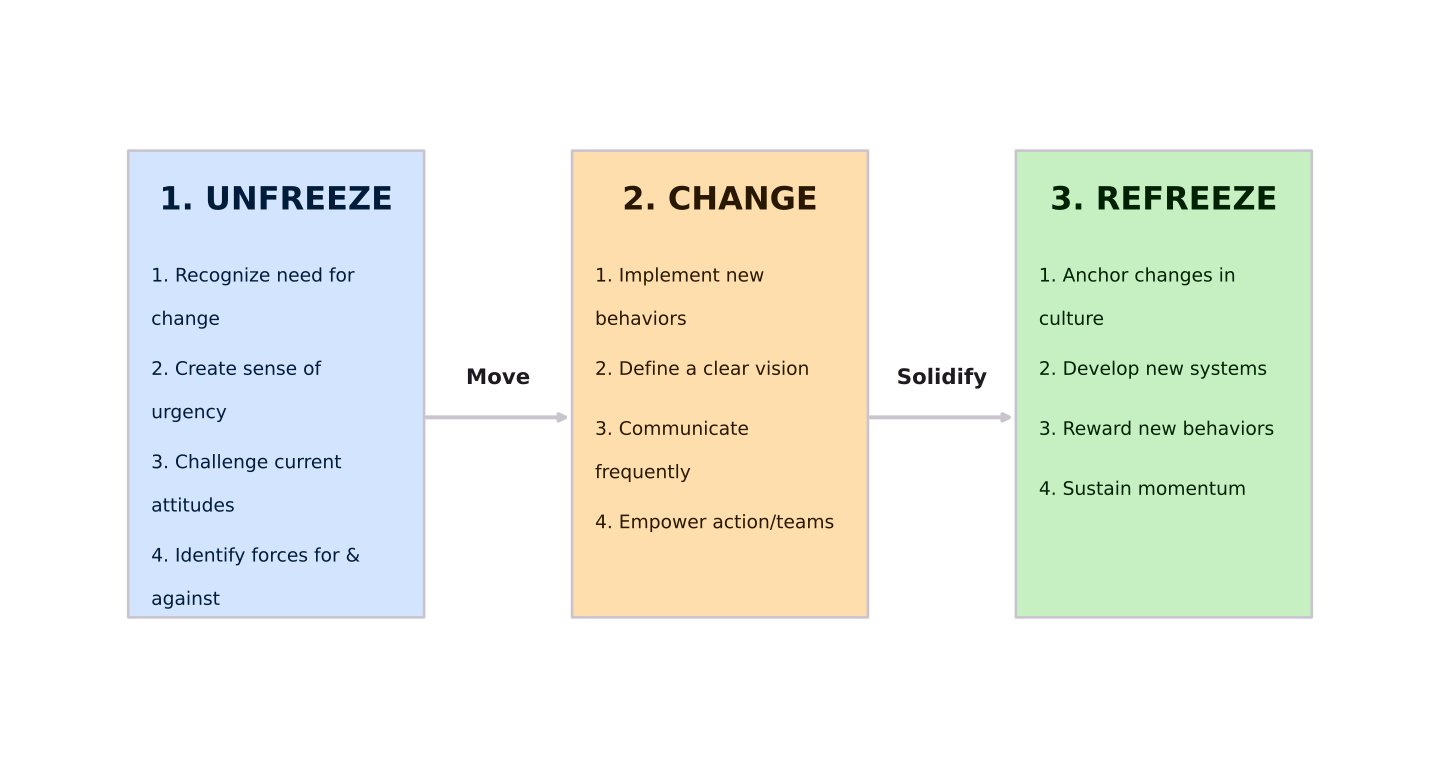
The Three Phases of Lewin’s Model
1. Unfreeze – Preparing for Change
Before implementing change, organizations must disrupt existing norms and practices to create openness toward new approaches. This phase involves:
- Identifying the need for change – Organizations assess inefficiencies, market shifts, or internal challenges requiring adaptation.
- Creating urgency – Leadership communicates a compelling case for transformation.
- Reducing resistance – Employees tend to resist change due to uncertainty; this phase helps alleviate concerns through transparency, stakeholder involvement, and early engagement.
Related Theories:
- Kotter’s 8-Step Change Model emphasizes urgency, reinforcing the unfreeze phase.
- Prospect Theory (Kahneman & Tversky, 1979) explains how people perceive risks in decision-making; businesses must frame change positively to counter loss aversion.
2. Change – Implementing New Practices
Once readiness is established, businesses begin transforming operations, structures, or behaviors. Key actions in this phase include:
- Clear communication of the change strategy.
- Providing training and support to facilitate adoption.
- Encouraging experimentation and adaptability, allowing employees to adjust.
Change is often non-linear, requiring flexibility and feedback loops. Organizations must monitor progress, adjust strategies, and recognize small wins to maintain momentum.
Related Theories:
- TAM2 (Technology Acceptance Model 2) highlights the importance of perceived usefulness and ease of use, reinforcing the adoption of new systems.
- Diffusion of Innovation Theory (Rogers, 1962) explains how early adopters influence broader acceptance during the change phase.
3. Refreeze – Solidifying the Change into Culture
Once new processes or behaviors are successfully adopted, businesses must institutionalize change to prevent employees from reverting to old habits. This requires:
- Embedding changes into organizational norms (updated policies, performance incentives, leadership reinforcement).
- Providing long-term support, including continuous training.
- Celebrating success, ensuring employees recognize the benefits of change.
The refreeze phase focuses on stability, ensuring changes become ingrained within company culture for sustainable transformation.
Related Theories:
- Institutional Theory highlights how organizations embed norms into formal structures.
- Kaizen (Continuous Improvement) suggests that even after refreezing, organizations should remain adaptable, refining processes over time.
Application of Lewin’s Model in Business
Consider a large insurance firm transitioning to AI-powered risk assessment tools for underwriting policies. The company can apply Lewin’s model in the following way:
- Unfreeze: Leadership communicates market demands for faster risk assessments, outlining inefficiencies in traditional manual processes.
- Change: The firm implements AI-driven analytics, provides extensive employee training, and encourages experimentation with automated workflows.
- Refreeze: AI-driven assessments become standard practice, integrated into performance evaluations, and reinforced through leadership support.
By following Lewin’s structured change process, the insurance firm ensures successful adoption and long-term process efficiency.
Final Thoughts
Lewin’s Unfreeze-Change-Refreeze Model provides a structured yet adaptable approach to organizational transformation. Business leaders must address resistance, implement change strategically, and institutionalize new practices for long-term success. Mastering this framework enables executives to drive sustainable change, whether through digital transformation, operational improvements, or strategic shifts.