Key takeaway: Kotter’s model outlines eight steps for successful organisational change: create urgency, build a guiding coalition, form a vision, communicate it, empower action, generate short‑term wins, sustain momentum, and anchor new behaviours. It helps leaders manage change systematically and increase the likelihood of lasting transformation.
Organizational change is often met with resistance, uncertainty, and execution challenges. John Kotter’s 8-Step Change Model, introduced in his 1996 book Leading Change, provides a structured framework for implementing successful transformation initiatives within companies. Kotter emphasizes that change is not simply about introducing new processes; it requires strong leadership, stakeholder buy-in, and a carefully managed transition to ensure sustainability.
This model is widely applied in corporate restructuring, digital transformation, mergers and acquisitions, and strategic business initiatives, making it essential for business leaders driving change.
The 8 Steps of Kotter’s Change Model
Kotter’s model follows a logical sequence to create momentum, overcome resistance, and sustain progress.
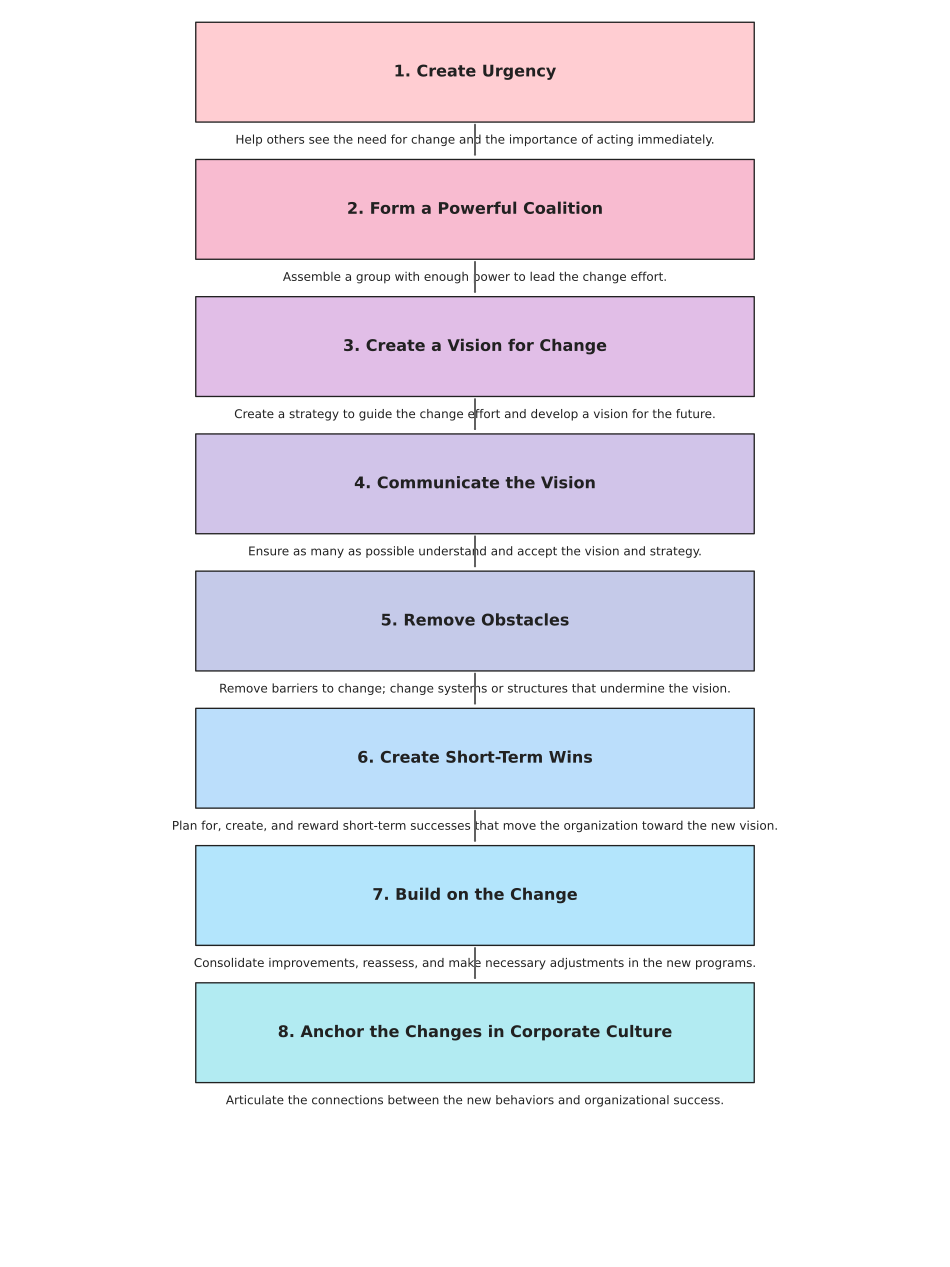
1. Create a Sense of Urgency
- Rationale: Change must begin with a strong impetus for action, a recognition that maintaining the status quo is untenable.
- Application: Leadership communicates market disruptions, competitive threats, or internal inefficiencies that necessitate change.
- Related Theories: Aligns with Lewin’s Unfreeze-Change-Refreeze Model, where urgency triggers the initial “unfreeze” phase.
2. Build a Guiding Coalition
- Rationale: Change requires influential stakeholders, including executives, managers, and key employees, who champion the transformation.
- Application: Organizations assemble leadership teams that drive strategy and align departments.
- Related Theories: Connects with Stakeholder Theory, emphasizing engagement and buy-in from diverse organizational groups.
3. Develop a Vision for Change
- Rationale: A clear strategic vision helps employees understand the purpose of transformation and provides direction.
- Application: Companies articulate measurable goals, success criteria, and long-term aspirations for the change initiative.
- Related Theories: Draws from Goal-Setting Theory, where well-defined objectives drive engagement and execution.
4. Communicate the Vision
- Rationale: Transparent, consistent messaging reinforces commitment and minimizes uncertainty.
- Application: Organizations use multi-channel communication (town halls, reports, workshops) to explain the vision and address concerns.
- Related Theories: Prospect Theory from behavioral economics applies here, clarity reduces anxiety about losses associated with change.
5. Remove Obstacles & Empower Action
- Rationale: Resistance often stems from structural barriers, operational inefficiencies, or individual reluctance.
- Application: Companies eliminate bureaucratic hurdles, provide training, and foster a supportive culture for employees to take initiative.
- Related Theories: Connects with Theory X and Theory Y (McGregor), employees thrive when empowered rather than restricted.
6. Generate Short-Term Wins
- Rationale: Achieving quick, visible successes helps sustain motivation and builds credibility for the initiative.
- Application: Organizations track KPIs, celebrate milestones, and reward early adopters of new processes.
- Related Theories: Aligns with Kaizen (continuous improvement), incremental success reinforces long-term momentum.
7. Sustain Acceleration
- Rationale: Change can lose momentum if not continually reinforced.
- Application: Companies scale successful interventions, refine strategies, and embed new behaviors in corporate culture.
- Related Theories: Aligns with Innovation Diffusion Theory, where sustained effort moves an organization beyond early adopters.
8. Institute Change into the Culture
- Rationale: For transformation to endure, new behaviors must be embedded into the organization’s DNA.
- Application: Businesses integrate change into performance appraisals, onboarding processes, leadership development, and long-term strategic planning.
- Related Theories: Links to Institutional Theory, explaining how norms and structures evolve for lasting impact.
Application of Kotter’s Model in Business
Consider a global manufacturing firm transitioning to sustainable production methods due to regulatory pressure and evolving consumer preferences. Using Kotter’s model, leadership can:
- Create urgency by emphasizing environmental risks and compliance requirements.
- Form a coalition with executives, operational managers, and sustainability experts.
- Develop a vision focused on green supply chain integration and energy-efficient processes.
- Communicate effectively, ensuring clarity across departments.
- Remove obstacles, such as outdated procurement practices.
- Generate short-term wins, highlighting successful adoption in pilot projects.
- Sustain acceleration, expanding implementation company-wide.
- Institutionalize change, integrating sustainability into corporate strategy and performance evaluations.
Through structured change management, the firm ensures successful adoption and long-term competitive advantage.
Final Thoughts
Kotter’s 8-Step Change Model provides a systematic, leadership-driven approach for managing transformation. Business leaders implementing change must focus on urgency, coalition-building, communication, and reinforcement to drive adoption. Mastering this framework enhances organizational agility, ensuring business resilience in evolving markets.