Key takeaway: The Technology Adoption Lifecycle describes how new technologies spread across five groups: innovators, early adopters, early majority, late majority, and laggards. Moore highlights the “chasm” between early adopters and the early majority, where many innovations fail. Crossing this gap requires targeted positioning, clear value propositions, and market focus.
The Technology Adoption Lifecycle, developed by Geoffrey Moore, is a refinement of Everett Rogers’ Diffusion of Innovations Theory. It categorizes consumers based on their willingness to adopt new technologies and highlights the challenges businesses face when transitioning products from early adopters to mainstream users.
Moore’s key contribution is the concept of “the chasm,” which represents the critical gap between early adopters and the early majority. Many technology companies fail at this stage because they do not tailor their strategies to overcome resistance from pragmatic consumers.
Understanding this lifecycle helps firms shape product positioning, marketing strategies, and customer engagement. It connects to Disruptive Innovation Theory (Clayton Christensen), Porter’s Five Forces, and Behavioral Economics, guiding companies on how to scale innovations effectively.
Stages of the Technology Adoption Lifecycle
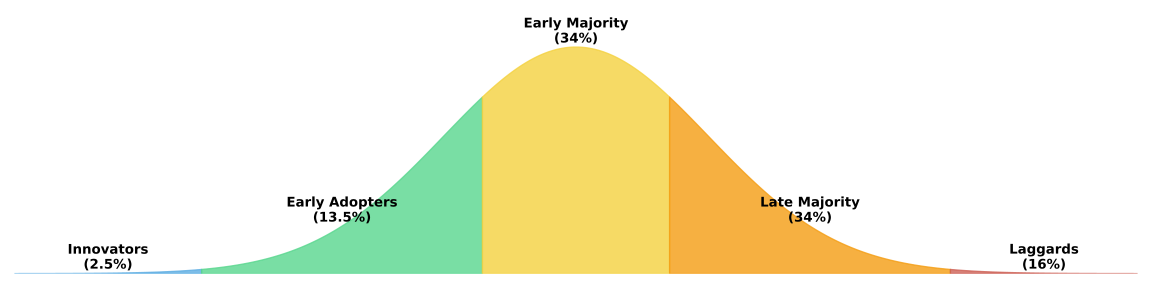
Moore’s model divides adopters into five distinct categories, illustrating the journey from niche appeal to mass-market acceptance:
1. Innovators (2.5%) – The Risk-Takers
- These tech-savvy individuals embrace emerging technologies despite uncertainty and high costs.
- They provide initial validation but do not influence mainstream consumers.
2. Early Adopters (13.5%) – The Influencers
- Visionaries who recognize competitive advantages and shape industry trends.
- Their endorsement encourages adoption among broader audiences.
3. The Chasm – The Critical Gap
- Between early adopters and the early majority, a chasm exists where many innovations fail.
- Pragmatic consumers demand proof of reliability, cost-effectiveness, and widespread acceptance before committing.
- Crossing the chasm requires strategic marketing, strong customer testimonials, and industry validation.
4. Early Majority (34%) – The Pragmatists
- Adopt once they see proven success and risk reduction.
- They seek user-friendly interfaces, robust customer support, and seamless integration into existing workflows.
5. Late Majority (34%) – The Skeptics
- Resistant to change, they adopt only after an innovation becomes standardized and widely accepted.
- This group requires price incentives, social proof, and industry endorsements.
6. Laggards (16%) – The Traditionalists
- Extremely reluctant to adopt new technology unless forced by regulation or necessity.
Link to Strategic Business Theories
1. Disruptive Innovation Theory (Clayton Christensen)
- Disruptors typically struggle with the chasm, as their technologies start with niche appeal before scaling.
- Firms must refine usability, establish credibility, and secure mainstream endorsements to succeed.
2. Porter’s Five Forces & Competitive Positioning

- Crossing the chasm strengthens market presence, reducing the threat of substitutes and new entrants.
- Companies that establish a strong early majority adoption gain a sustainable competitive advantage.
3. Behavioral Economics & Consumer Decision-Making
- Adoption is influenced by social proof, perceived risk, and psychological barriers.
- Businesses must implement strategic pricing, influencer marketing, and education campaigns to accelerate uptake.
Example: How Businesses Apply the Technology Adoption Lifecycle
Consider Zoom disrupting the video conferencing industry:
- Innovators & Early Adopters: Startups and tech firms adopted Zoom early due to its ease of use and affordability.
- The Chasm: Corporate buyers remained hesitant, favoring legacy solutions (Cisco Webex, Skype).
- Early Majority: The COVID-19 pandemic accelerated adoption among mainstream users, forcing businesses to integrate Zoom into daily operations.
- Late Majority & Laggards: Traditional enterprises adopted Zoom only once competitors, governments, and regulators endorsed remote work solutions.
Zoom successfully crossed the chasm by enhancing security, refining user experience, and leveraging industry partnerships, securing its dominance in the corporate world.
Conclusion
The Technology Adoption Lifecycle is essential for businesses introducing innovations. By understanding Moore’s Chasm, Christensen’s Disruptive Innovation, and Behavioral Economics, firms can craft strategies to accelerate market acceptance, mitigate adoption resistance, and establish long-term competitive advantages.