The business cycle refers to the fluctuating levels of economic activity over time, characterized by periods of growth and contraction. These cycles impact businesses, consumers, and policymakers, influencing investment decisions, employment rates, and financial stability.
The business cycle typically moves through four key phases:
- Expansion – Economic growth accelerates, marked by rising GDP, employment, and consumer spending.
- Peak – Growth reaches its highest point, often leading to inflationary pressures.
- Contraction/Recession – Economic activity slows, resulting in lower demand, rising unemployment, and reduced investment.
- Trough – The lowest phase, signaling the start of recovery.
This cycle is influenced by market forces, government policies, and external shocks such as geopolitical events or financial crises.
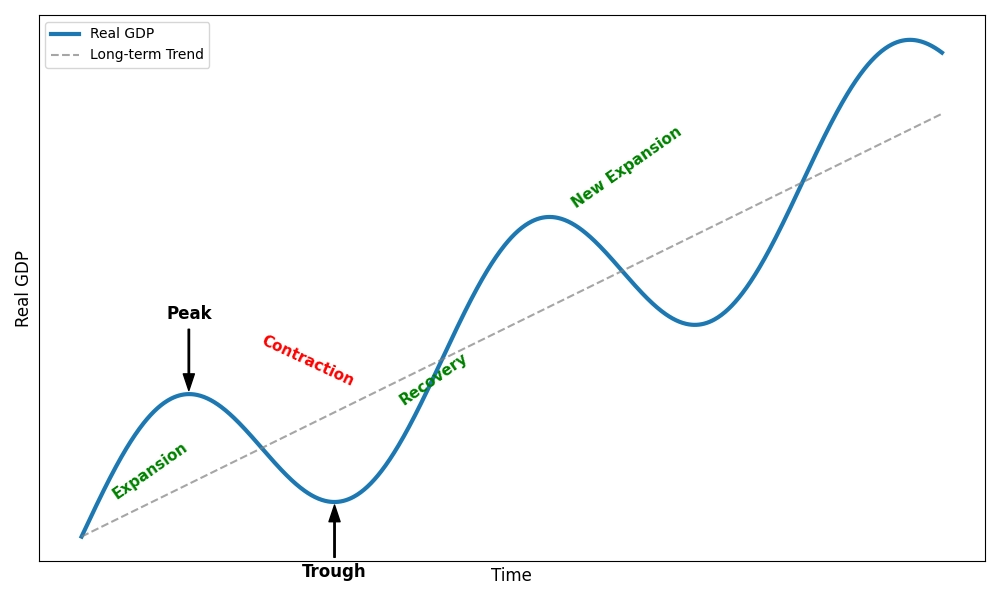
The Phases of the Business Cycle in Detail
1. Expansion (Growth Phase)
- GDP increases as businesses expand production and hiring.
- Consumer and business confidence boost investment and spending.
- Wages and employment rates rise, driving disposable income.
- Interest rates may remain low to encourage borrowing and investment.
2. Peak (Economic Boom)
- The economy reaches maximum output, causing potential overheating.
- Inflation rises due to high demand and potential labor shortages.
- Central banks may increase interest rates to curb inflation, slowing further expansion.
3. Contraction (Recessionary Phase)
- Demand declines, leading to lower production and job losses.
- Investment slows as firms cut costs and postpone expansion plans.
- Unemployment rises, reducing consumer spending and confidence.
- Governments may implement stimulus measures to stabilize the economy.
4. Trough (Recovery Begins)
- The economy bottom-outs, signaling the start of recovery.
- Businesses adjust operations, and new investments emerge.
- Government policies, such as lower interest rates and fiscal stimulus, encourage growth.
- Slowly, economic activity starts to pick up, leading back into expansion.
Theoretical Foundations and Connections
Several economic theories help explain the business cycle:
1. Keynesian Economic Theory
John Maynard Keynes argued that business cycles result from changes in aggregate demand. Keynesian economics emphasizes government intervention through fiscal policies, such as adjusting taxation and public spending to stabilize growth.
2. Monetarist Theory (Milton Friedman)
Monetarists attribute business cycle fluctuations to monetary policy and central bank actions. They stress that inappropriate changes in the money supply (such as excessive expansion or contraction) can drive booms or recessions.
3. Real Business Cycle (RBC) Theory
RBC theory suggests that business cycles are driven by external shocks (e.g., technological advancements, supply chain disruptions). It views fluctuations as natural responses to economic shifts rather than purely policy-driven.
4. Schumpeter’s Creative Destruction
Joseph Schumpeter proposed that business cycles stem from waves of innovation, as new technologies replace outdated methods, industries evolve, leading to temporary disruptions but long-term economic progress.
Linkages to Other Business Concepts
The business cycle impacts various strategic frameworks, including:
- Porter’s Competitive Strategy – Firms must adjust strategies during cycles, focusing on cost efficiency during downturns and innovation during expansions.
- Capital Budgeting & Investment Decisions – Businesses prioritize expansion projects during booms and risk mitigation during recessions.
- Supply Chain Management – Inventory and procurement strategies must adapt to changing economic conditions.
Practical Application: How Businesses Use the Business Cycle
Example: A Global Automobile Manufacturer
An automotive company like Toyota navigates business cycle phases strategically:
- Expansion Phase → Launches new models and increases production to meet rising demand.
- Peak Phase → Implements pricing strategies to counter inflationary pressures.
- Recession Phase → Focuses on cost-cutting, reducing inventory, and offering discounts to sustain revenue.
- Trough Phase → Invests in R&D, preparing for the next wave of economic growth.
By understanding the business cycle, Toyota optimizes its operations, financial planning, and product strategy, ensuring resilience across economic fluctuations.
Final Thoughts
For MBA professionals, mastering the business cycle is essential for strategic decision-making, risk assessment, and market forecasting. Whether managing corporate investments, financial policies, or operational strategy, aligning business activities with economic cycles ensures sustainable success.